

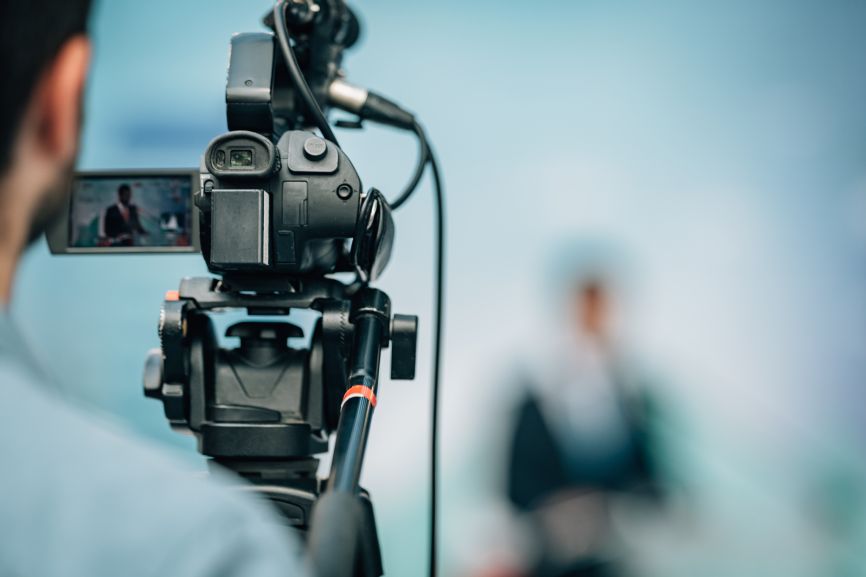
If you are a brand manager, agency producer, marketing team, or business owner preparing a television campaign, TV commercial production can feel more complicated than the finished 30-second spot suggests. Behind those few seconds are scripts, casting, locations, permits, crew schedules, filming, editing, sound, colour, and technical delivery requirements. Poor planning at any stage can cause delays, higher costs, or a final commercial that misses the original creative goal. Scarlet Production helps brands and agencies manage this process through its TV commercial production services in Thailand, supporting campaigns from planning and filming through post-production and final delivery.
So, how are TV commercials actually made?
The TV commercial production process usually has three main stages: pre-production, production, and post-production, followed by final delivery. The shoot itself may take only a day or several days, but much of the real work happens before the cameras roll and after filming ends.
Understanding each stage makes it easier to brief a production company, control costs, approve creative decisions, and know what to expect from concept to screen.
What Goes Into Making a TV Commercial?
A TV commercial is a short-form film built around a marketing objective.
That objective might be launching a product, promoting a service, building brand awareness, or persuading viewers to take action. The creative idea has to work within practical limits such as budget, deadlines, talent availability, locations, media formats, and exact runtime.
Most commercial productions follow four broad steps:
- Pre-production: Concept, script, storyboard, casting, locations, budgeting, permits, crew, and schedule.
- Production: Filming performances, product footage, dialogue, B-roll, and supporting shots.
- Post-production: Editing, colour grading, sound, voiceover, music, graphics, VFX, and revisions.
- Delivery: Preparing final versions for television, digital advertising, social media, and other platforms.
Each stage depends on the one before it. Rushing pre-production often does not save time. It simply pushes unresolved problems into the shoot, where changes are harder and more expensive to fix.
Pre-Production: Where Every Good TVC Starts
Pre-production is where the commercial is planned before filming begins.
For first-time buyers, this is often the most underestimated part of how TVCs are made. It is also where many decisions affecting budget, quality, and timing are made.
Concept and Script Development
Every TVC needs one clear purpose.
Before writing dialogue or planning camera angles, the team should answer a few basic questions:
- Who is the audience?
- What should viewers understand or feel?
- What is the main message?
- What action should they take?
- Where will the commercial appear?
- What durations and formats are required?
From there, the idea develops into a script.
A 15-, 30-, or 60-second commercial leaves very little room for unnecessary information. Every line and visual should support the central message.
The script may then be supported by storyboards, mood boards, shot lists, visual references, or a director’s treatment. These tools allow the client, agency, director, cinematographer, and production team to align before filming begins.
If the concept is still being shaped, understanding the principles behind writing a script that sells can help avoid a common problem: trying to squeeze too many selling points into a short commercial.
A strong TVC usually has one central idea. Everything else should reinforce it.
To see how strong concepts, memorable storytelling, and clear brand messaging come together in practice, explore some of the best TV commercials of all time and what made them work.
Casting and Location Scouting
Once the script is approved, the production team turns the concept into something that can physically be filmed.
Casting may involve actors, models, presenters, extras, children, specialist performers, or real employees and customers. The right talent is not just someone who looks suitable. They also need to communicate the right emotion, personality, or credibility.
Location scouting happens alongside casting.
A commercial filming in Thailand might use a Bangkok office, studio, hotel, residential property, restaurant, street, beach, or another location outside the capital.
Each location creates practical questions:
- Can the crew access it easily?
- Is there enough space for equipment?
- Is power available?
- Is background noise manageable?
- Does filming require permission?
- How could weather affect the schedule?
This is especially important for international productions. A location may look perfect in photos but create logistical problems once a full crew, equipment, vehicles, and talent arrive.
Budgeting and Scheduling
This is where creative ambition meets practical reality.
A TVC budget may include:
- Director and crew
- Cast and extras
- Camera and lighting equipment
- Studios or locations
- Props and art direction
- Wardrobe, hair, and makeup
- Transport and catering
- Permits
- Music and voiceover
- Editing and colour grading
- Sound design
- Motion graphics or VFX
- Additional campaign versions
The cost is not determined only by runtime.
A 15-second commercial with several locations, elaborate sets, or extensive visual effects may cost more to produce than a simple 60-second spot.
Brands planning their budget can explore how much this process costs before locking in a creative direction.
Scheduling is equally important. The production team coordinates talent, locations, equipment, permits, travel, setup times, lighting needs, and filming order.
Here is the thing: losing an hour during planning is frustrating. Losing an hour when the cast, crew, equipment, and location are already booked can be expensive.
That is why good pre-production focuses on solving as many problems as possible before shoot day.
To understand how budget changes across different ad lengths and production requirements, see our breakdown of TV commercial production cost for 15, 30, and 60-second commercials.
Production: The Shoot Day(s)
Production is the stage most people imagine when they think about making a TV commercial.
Cameras arrive, lighting is set up, talent goes through wardrobe and makeup, and the director begins working through the shooting plan.
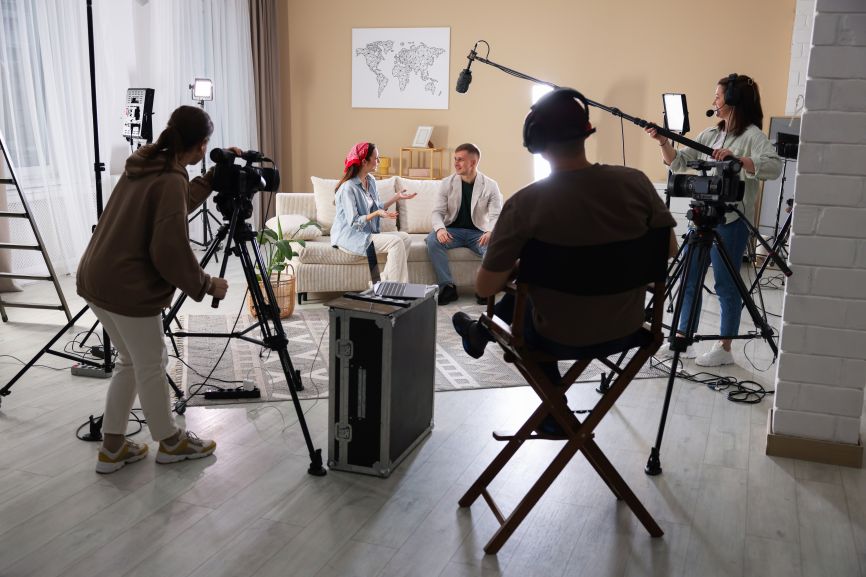
But a professional TVC set involves many specialised roles.
Crew Roles: Director, DOP, Line Producer, and Sound
The exact crew varies depending on the campaign, but several roles are especially important.
Director: Leads the creative execution, including performances, storytelling, pacing, and how the approved concept appears on screen.
Director of Photography (DOP or DP): Oversees the visual approach, including camera movement, lenses, framing, lighting, and exposure.
Line Producer: Manages much of the practical production work, including scheduling, budgeting, crew coordination, locations, and logistics.
Sound Team: Records usable dialogue and production audio when required.
Larger commercials may also involve assistant directors, camera assistants, gaffers, grips, production designers, stylists, makeup artists, production assistants, drone operators, and special-effects teams.
On-Set Workflow
Commercials are usually filmed in the most efficient order rather than in the order scenes appear in the final edit.
The crew prepares the set while camera and lighting teams build the shot. Talent moves through wardrobe, makeup, rehearsals, and blocking.
Once everything is ready, the director records multiple takes until the necessary performance and technical coverage have been captured.
A production may film:
- Wide shots
- Close-ups
- Product shots
- Alternate performances
- Inserts
- Reaction shots
- Establishing shots
- Slow-motion footage
- B-roll
Why shoot so much for a 30-second commercial?
Because editors need options.
A different expression, camera angle, or product shot can make a major difference once the final commercial is being assembled.
Common Shoot-Day Challenges
Even well-planned shoots can run into problems.
Weather can change. A location may suddenly become noisy. Traffic can delay equipment. Talent availability can shift. A permit may limit where or when filming can happen.
Productions in Thailand may also need to plan around heat, tropical weather, Bangkok traffic, and changing exterior light.
Professional production is partly about preventing these problems and partly about responding quickly when something unexpected happens.
The goal is not to assume everything will go perfectly. It is to prepare well enough that one problem does not derail the entire shoot.
Post-Production: From Raw Footage to Broadcast-Ready
Once filming is complete, the footage moves into post-production.
This is where raw footage, audio, music, graphics, and other assets are turned into the finished advertisement.
Editing and Colour Grading
The editor organises the footage, reviews the strongest takes, and begins building the commercial.
The edit may pass through several stages:
- Initial assembly
- Rough cut
- Client or agency feedback
- Revised edit
- Picture approval
- Final finishing
In a 30-second TVC, small timing decisions matter.
Holding a shot slightly longer can change the pace. Showing the product earlier can change what viewers remember. Choosing a different performance can completely alter the emotional tone.
Once the edit is approved, colour work creates a consistent final image.
Colour correction balances technical differences between shots, while colour grading develops the intended visual style, whether clean, warm, cinematic, natural, or highly stylised.
Sound Design and Mixing
Sound contributes heavily to how polished a commercial feels.
Post-production audio may include:
- Dialogue cleanup
- Voiceover
- Music
- Foley
- Product sounds
- Sound effects
- Atmosphere
- Final mixing
The final audio must also meet the requirements of the broadcaster or platform receiving the commercial.
Different broadcasters can have different technical specifications, so production teams should confirm the required delivery standards rather than assuming that one audio master works everywhere.
Versioning for Different Formats and Durations
Modern campaigns rarely produce only one version.
A TV commercial shoot may also need to supply:
- 60-second hero film
- 30-second TVC
- 15-second cutdown
- 6-second bumper
- 16:9 digital version
- 9:16 vertical video
- 1:1 or 4:5 social version
- Different end cards
- Subtitle versions
- Multiple languages
This should be considered during pre-production.
If vertical content is required, for example, the director and DOP can compose certain shots with both horizontal and vertical crops in mind.
Planning those versions early usually produces better results than trying to force every format out of one widescreen master later.
Delivery and Distribution
Once the commercial is approved, final masters are prepared for delivery.
A broadcaster, agency, media owner, or digital platform may specify requirements for:
- Resolution
- Frame rate
- Codec
- Aspect ratio
- Colour specifications
- Audio configuration
- Loudness
- Captions
- File naming
- Quality control
Professional television production uses established technical standards, but individual broadcasters may still have their own delivery requirements.
The safest approach is to obtain the current specification directly from the broadcaster or platform receiving the commercial.
Digital and social versions may need different files again.
This means the commercial video production process often ends not with one final video, but with a package of campaign-ready versions designed for different screens, runtimes, languages, and markets.
How This Played Out on Oppo Reno15
Scarlet Production’s Oppo Reno15 project shows how these stages come together in a real international campaign.
For the campaign supporting the Reno15 series launch in Pakistan, Scarlet Production handled local production in Thailand.
According to the Oppo Reno15 TVC case study, Scarlet managed the Thailand production from permits through the shoot and final delivery, with Sohail Ahmad serving as line producer.
Communication was also important because the campaign involved a Pakistan-based team filming in Thailand.
Scarlet’s case study notes that having an Urdu-speaking producer on the ground helped keep communication direct and reduced the risk of details being lost between the campaign brief and the production itself.
It is a good example of why international TVC production depends on more than camera work.
Creative direction matters, but so do local crews, permits, logistics, communication, scheduling, and having one production team responsible for bringing everything together.
FAQ
How are TV commercials made?
TV commercials are usually produced through pre-production, production, and post-production. Pre-production covers planning, scripting, casting, locations, budgets, permits, and schedules. Production is the filming stage. Post-production includes editing, colour grading, sound, graphics, revisions, and final mastering.
How long does it take to make a TV commercial?
A straightforward commercial may take several weeks from planning to delivery, while complex campaigns can take longer. Timelines depend on approvals, casting, locations, shoot complexity, post-production, visual effects, and the number of versions required.
Who is involved in a TVC shoot?
A TVC may involve a director, producer, line producer, director of photography, assistant directors, camera crew, lighting and grip teams, sound crew, production designers, stylists, makeup artists, actors, production assistants, and post-production specialists.
How many days does it take to shoot a TV commercial?
Some commercials can be filmed in one day, while others require several shoot days. The schedule depends on the number of scenes, locations, cast members, setups, product shots, and technical requirements.
What happens before a TV commercial is filmed?
Before filming, the team finalises the concept and script, develops storyboards or shot lists, casts talent, scouts locations, establishes the budget, hires crew, secures permissions or permits, and builds the production schedule.
What happens after a TV commercial is filmed?
The footage enters post-production, where it is edited, colour graded, mixed with sound, combined with graphics or VFX, reviewed, revised, and mastered for delivery.
Is TV commercial production different from social media video production?
The core stages are similar, but TVCs often involve stricter technical delivery requirements, fixed runtimes, larger crews, and more formal approval processes. Social content is often designed around mobile viewing, vertical formats, and platform-specific creative requirements.
Can one commercial be used for TV, YouTube, and social media?
Yes, but the footage should ideally be planned for multiple platforms from the beginning. A campaign can then create separate durations, aspect ratios, crops, subtitles, hooks, and end cards while keeping the same overall creative identity.
From Pre-Production to Delivery, the Details Matter
A successful TV commercial is not created on shoot day alone.
It is the result of connected decisions made from pre-production to delivery: the concept, script, casting, locations, budget, crew, filming, performances, editing, sound, colour, technical mastering, and campaign versions.
For brands and agencies, understanding the TV commercial production process makes it easier to brief production partners, manage approvals, control costs, and avoid unnecessary surprises.
And when a campaign involves filming internationally, an experienced local production partner becomes even more valuable.
Scarlet Production supports TV commercial projects in Thailand across planning, crew and equipment, casting, locations, filming, post-production, and multi-format delivery.
Ready to produce your TV commercial in Thailand? Get in touch with Scarlet Production to discuss your campaign from planning through final delivery.